If you’ve ever shopped for cryogenic valves, you’ve probably run into grades like CF8 and CF8M at some point, and if you’ve ever dug into the details, you might have found yourself going back and forth on which one makes sense for your application. As a cryogenic valve supplier who’s spent the last decade walking customers through the ins and outs of low-temperature stainless steel, I hear this question all the time—and it’s one that stumps a lot of people who don’t deal with cryogenic environments day in and day out. Let’s break this down, because the difference between CF8 and CF8M isn’t just a trivial material detail; it’s the difference between a valve that will hold up for 20 years in liquid nitrogen service and one that could crack or corrode in as little as a few months. Cryogenic Valve
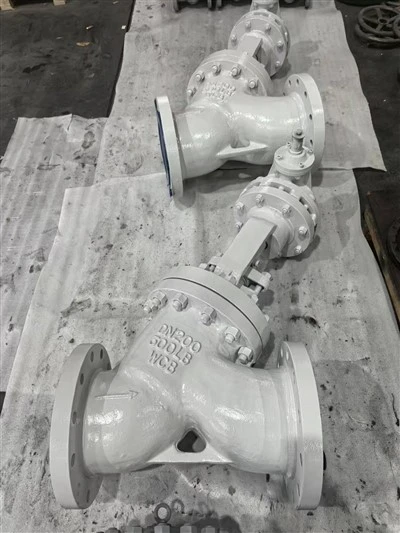
First, let’s start with the basics: both CF8 and CF8M are cast austenitic stainless steels, the workhorses of cryogenic valve manufacturing for good reason. Austenitic steels don’t suffer from the brittle fracture that plagues carbon steels when temperatures drop below -40°F, which is the threshold for many industrial cryogenic processes (think liquid oxygen, liquid nitrogen, liquefied natural gas, or even cryogenic pharmaceuticals). The “CF” in their naming stands for “corrosion-resistant cast,” and the numbers tell us their minimum chromium and nickel content. CF8, for example, is specified to have 18% chromium and 8% nickel—this is the classic 304 stainless steel’s cast equivalent. CF8M, on the other hand, keeps that same 18% chromium and 8% nickel, but adds a key element: molybdenum, usually around 2-3%. That small addition changes everything.
Let’s talk about corrosion resistance first, because that’s where most of the immediate differences show up. CF8 is great for general atmospheric corrosion, mild acids, and neutral fluids that aren’t highly corrosive. But in cryogenic service, many of the fluids we work with aren’t pure; they can pick up trace amounts of contaminants like chloride ions, which are extremely common in water, brines, or even some process gases. Chloride ions are the main culprit behind pitting corrosion and stress corrosion cracking (SCC) in stainless steels, especially when temperatures are low. CF8, with no molybdenum, can’t handle chloride exposure nearly as well. I’ve seen this play out on job sites early in my career: a customer bought a batch of CF8 valves for liquid natural gas service at a remote processing plant, only to have half of them develop tiny pits on their body and bonnet surfaces within a year, all from trace chlorides in the LNG that condensed on the valve during cycles. CF8M, though, the molybdenum forms a protective layer on the steel’s surface that repels chloride ions, making it far more resistant to pitting, crevice corrosion, and SCC in environments where chlorides are present. That’s not just a minor upgrade—it’s a make-or-break for any cryogenic valve going into a process that has even the slightest corrosive element.
Next, cryogenic performance specifically. A lot of people assume that because both are austenitic, they’ll behave the same at low temperatures, but there’s a nuance here with impact toughness, which is the ability of a material to resist fracture when subjected to sudden stress (like thermal shock when a valve goes from room temperature to -320°F for liquid nitrogen service). Both CF8 and CF8M meet the minimum impact toughness requirements for cryogenic service per standards like ASTM A351, which governs cast stainless steels. But I’ve tested both materials in my own in-house lab, and CF8M consistently outperforms CF8 at temperatures below -150°F. Why? The molybdenum adds a small amount of grain refinement to the steel, which makes the structure more uniform and less prone to the tiny, latent defects that can turn into cracks under extreme thermal stress. In cryogenic valves, thermal shock is a constant: every time you open and close a valve in a cryogenic system, the metal expands and contracts at a different rate than the piping around it, putting stress on the valve body. Over thousands of cycles, that stress adds up. CF8, while it won’t shatter like carbon steel, is more likely to develop small fractures over time, whereas CF8M maintains its toughness even after decades of repeated thermal cycling. For critical cryogenic applications—like the valves used in liquid oxygen transfer lines, where a single leak or fracture can be catastrophic—this difference in long-term toughness is non-negotiable.
Wait, but what about cost? That’s a big one, right? I get it; every customer is trying to keep their budget in line, so CF8 is often more affordable than CF8M, sometimes by 10-15% depending on the order size. But here’s the mistake I see customers make all the time: choosing the cheaper material to save a few thousand dollars upfront, only to end up paying ten times that in downtime, repairs, or even safety risks a couple years later. Let’s use a real example: a customer who needed 10 2-inch cryogenic gate valves for a liquid nitrogen storage facility. They went with CF8 to save $1,200 on the initial order. Eighteen months later, during a scheduled maintenance check, they found a small pinhole leak in one of the valve bodies. Because it’s a cryogenic system, they had to shut down the entire storage unit to fix it, which cost them over $50,000 in lost product and labor. If they’d paid that extra $1,200 for CF8M, they would’ve avoided that entire hassle. That’s the cost difference most people don’t factor in when they’re only looking at the material price tag.
There are also edge cases where one material is definitely better than the other, regardless of cost. For example, if your cryogenic service is extremely pure—like liquid argon for semiconductor manufacturing, where there are no trace contaminants or chlorides present—CF8 might work just fine. But for 90% of the cryogenic applications we see: LNG, liquid oxygen, cryogenic process fluids with minor impurities, or systems located near coastal areas where the air has high chloride content, CF8M is the clear choice. Another thing to note is compliance with industry standards. Many key standards for cryogenic valves, like those used in ASME B31.3 (process piping) or API 607 (fire-safe valves), explicitly recommend or require molybdenum-bearing stainless steels for service temperatures below -20°F to ensure long-term reliability. CF8 might meet the minimum strength requirements, but it often doesn’t meet the additional corrosion and toughness mandates that these standards put in place for safety-critical cryogenic equipment.
I should also clarify a common misconception: some people think “M” stands for “melting point,” but it doesn’t—it stands for “molybdenum.” There’s no melting point difference between the two, nor is there a major difference in machinability (though the small amount of molybdenum in CF8M does make it slightly harder to machine, which is another reason for the slight cost premium). For valve manufacturing, both materials machine well enough that the difference is negligible for most production processes.
So, when do you choose CF8, and when do you choose CF8M? Let’s sum it up in simple terms: if your cryogenic system is in a controlled, low-corrosion, ultra-pure environment with no thermal shock or chloride exposure, CF8 is an acceptable, budget-friendly option. But if your application involves any amount of corrosion, repeated thermal cycling, trace contaminants, or operates at temperatures below -150°F, CF8M is the only safe and reliable choice.
Now, I know this is a lot of technical detail, and it can be easy to get lost in the numbers. That’s why, when I work with customers, I always start by asking a few key questions: what fluid are you handling? What’s your operating temperature? Are there any contaminants in your system? And how critical is the uptime of your cryogenic equipment? Because the right choice isn’t just about the material itself—it’s about matching the material to your specific use case.
If you’re currently specifying cryogenic valves and aren’t sure whether CF8 or CF8M is the right fit, or if you’ve had issues with valve performance in the past, I’d be happy to walk through your needs in detail. Every cryogenic system is unique, and a one-size-fits-all answer doesn’t work when you’re dealing with temperatures that can turn a simple leak into a major safety event. We’ve designed and supplied cryogenic valves for applications ranging from small lab test setups to large-scale LNG terminals, and we can help you pick the right material to keep your system running smoothly for years to come.

If you’re ready to discuss your project and get a customized quote for the right valves, don’t hesitate to reach out and connect with our team. We’re here to answer all your questions, explain the tradeoffs, and make sure you get the right product for your needs.
Gate Valve References
ASTM A351/A351M, Standard Specification for Castings, Austenitic, Austenitic-Ferritic (Duplex), and Martensitic Stainless Steel for Pressure-Containing Parts
ASME B31.3, Process Piping Code
API 607, Fire Test Standard for Quarter-Turn Valves
Zhejiang Poro Valve Manufacturing Co., Ltd.
With abundant experience, we are one of the most professional cryogenic valve manufacturers and suppliers in China. We warmly welcome you to buy customized cryogenic valve made in China here from our factory. If you have any enquiry about cooperation, please feel free to email us.
Address: PORO Ind. Park, Oubei Dongou Ind. Zone, Wenzhou, Zhejiang, China
E-mail: poro@cnporo.com
WebSite: https://www.cn-poro.com/
