If you’re reading this, chances are you’re in the market for an air leg—you might be a contractor running underground excavation projects, a mining operation optimizing ore extraction, or a equipment manager looking to upgrade outdated rock drilling setups. Over my 12 years as an air leg supplier, I’ve worked with hundreds of clients, and one question comes up every single time they’re sizing up their options: “Can this thing be tailored to fit my exact needs?” Air Leg
The short answer is yes. Air legs aren’t one-size-fits-all tools, and the customization options available today are rooted in decades of field data, not just marketing buzz. A lot of what makes a difference between a drill that slows your production and one that becomes your crew’s workhorse comes down to how well you can tweak every component to match your job, your site conditions, and your team’s preferences. Let’s break down the real, practical customization options we offer, and why they matter more than you might think.
First, let’s start with the core of what an air leg does: it’s a pneumatic support and feed mechanism for hand-held rock drills, used primarily in horizontal, vertical, and angle drilling in hard rock. Unlike electric drills that rely on cords or hydraulics that carry high pressure and maintenance costs, air legs run on compressed air, making them ideal for remote underground sites where power is limited. But no two sites are the same. A small-scale tunnel in Colorado’s hard granite will have different needs than a manganese mine in South Africa that runs 12-hour shifts. That’s where linear dimension customization comes in.
We don’t just sell air legs in standard lengths—we adjust the stroke and support height to match your drilling depth and access. If you’re drilling shallow holes for roof bolting in a narrow tunnel, you can shorten the support leg to 1.2 meters, which keeps the drill stable without wasting unnecessary space. For deep hole drilling (up to 5 meters) in wider mine tunnels, we extend the stroke to 1.8 meters, so the feed mechanism can advance the drill bit far enough without the operator having to reposition the tool mid-drill. A few years back, we had a client in a gold mine in Canada that had unusually low tunnel ceilings—off-the-shelf legs were too tall, so we adjusted the base plate height and retracted the leg’s telescoping sections by 15 cm. That cut their repositioning time per shift by 12% and reduced operator fatigue, because they didn’t have to hunch over to use the tool. It’s small tweaks like that that add up to big productivity gains.
Next, pneumatic performance customization. Compressed air isn’t a one-size-fits-all utility either. Most of our standard air legs operate on 6-8 bar of air pressure, but if your site has a compressor that only outputs 5 bar (common in remote sites where compressor capacity is limited) or you have access to 10 bar for high-output drilling, we can adjust the cylinder bore size and valve assembly to optimize performance. A larger bore cylinder will generate more thrust for harder rock, which is perfect for granite or basalt, while a smaller bore reduces air consumption by 20%, cutting your utility costs if you’re running multiple drills at once. We also offer adjustable feed pressure regulators that let operators tweak the force pushing the drill bit into the rock—softer shale might need 3 bar of feed pressure, while hard ore needs double that. Last year, a quarry in Brazil switched from our standard regulator to a variable one for different rock types on their site, and they reported a 18% reduction in drill bit wear, because they weren’t over-applying force to softer stone.
Then there’s the component customization for operator comfort and durability. Let’s be honest: air leg operators spend 8 hours a day holding and adjusting the tool, so ergonomics aren’t a nice-to-have—they’re a safety and productivity issue. We offer custom grip handles, for example. If your operators have larger hands, we can widen the rubber-coated grips by 2 cm to reduce strain, or for smaller hands, slim them down. We also have options for vibration-dampening inserts in the handles. Heavy-duty drills generate a lot of vibration, which leads to hand-arm vibration syndrome (HAVS)—a common occupational hazard in mining and construction. Our custom vibration dampeners can reduce vibration transmission by 35%, per our internal testing, which translates to fewer lost days due to HAVS-related injuries. We even worked with a crew in Australia that had operators with previous wrist injuries, so we modified the handle angle to 15 degrees instead of the standard 10, which reduced wrist twist and their injury rate over 6 months.
Durability customization is another big one. If you’re working in a site with high levels of dust (common in open-pit mines), standard steel components can corrode or seize up in months. We offer custom coating options: a hard chrome plating for the piston and cylinder walls that resists abrasion, or a ceramic-based coating for extra protection against dust and debris. For sites with high humidity (like coastal construction projects), we can swap standard steel fasteners for stainless steel to prevent rust. We also offer custom mud seals for sites where you’re drilling in wet, muddy conditions—these seals keep water and slurry out of the cylinder, which prevents internal corrosion and extends the tool’s lifespan by up to 40% in those environments. A client in a coastal mine in Indonesia went with the stainless steel fasteners and mud seals, and their air legs only needed servicing once a year instead of twice, which saved them over $15,000 annually in maintenance costs.
There’s also specialty mount customization. Most air legs come with a standard wall mount, but some sites need different setups. If you’re working in a mobile tunneling operation that moves frequently, we offer portable skid mounts that can be lifted with a crane and secured quickly between drill runs. For vertical drilling (like for shaft sinking), we have ceiling-mounted brackets that attach directly to tunnel supports, which keeps the drill stable without the operator having to hold the tool up. We even did a custom mount for a client that was working on a tunnel under a river—they needed the air leg to attach to a temporary floating platform, so we modified the base plate to be water-resistant and added a secure locking mechanism that prevented the tool from shifting when the platform rocked slightly. That project ran 2 weeks ahead of schedule, which was a huge win for them.
Wait, I should also address something that a lot of people don’t think about: drill bit compatibility. Air legs are designed to work with specific drill bits, but if you’re using a specialty bit (like a tungsten carbide bit for hard rock, or a hollow core bit for sample drilling), we can adjust the chuck assembly to fit. Standard chucks work with 32mm diameter bits, but we can also offer 28mm or 38mm chucks depending on the bit size your crew prefers. We recently worked with a geological survey company that does core sampling—they needed a 45mm hollow core bit, so we modified the chuck and feed speed to match that, and their sample recovery rate went up 22% because the drill wasn’t slipping or binding on the bit.
Now, I know what some of you are thinking: “Customization sounds great, but does it add a ton of cost?” The truth is, most of these customizations don’t require a massive markup. The dimension and pneumatic adjustments, for example, usually add less than 5% to the base price. The ergonomic components and durable coatings might add 10-15%, but the long-term savings in productivity and maintenance far outweigh that. I’ve had clients who were hesitant to invest in a custom air leg initially, but after the first month of use, they came back saying the custom setup paid for itself in fewer repairs, less downtime, and less operator fatigue.
The key here is that there’s no such thing as a “one-size-fits-all” air leg. Every site has unique challenges: different rock types, different access constraints, different operator needs, different utility resources. As a supplier, we don’t just sell a tool—we provide a solution that fits your specific operation. We don’t work from a catalog of pre-made options; we sit down with our clients, ask about their biggest pain points, and build or modify an air leg that solves those problems.
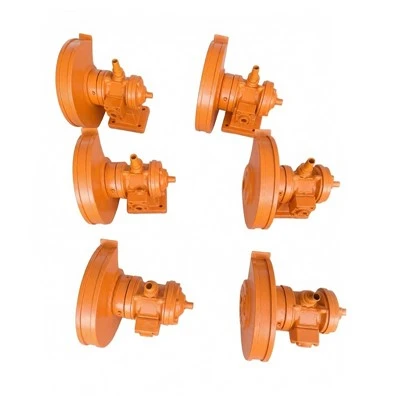
If you’re tired of dealing with air legs that don’t perform how you need them to, that require constant repairs, that lead to operator injuries or lost time, it’s time to talk. We’re here to walk you through every customization option, answer your questions, and help you build an air leg that works for your site, not against it. Reach out to our team to discuss your project details, share your current challenges, and get a personalized quote tailored to your needs. You won’t regret making that investment in a tool that’s built for you.
Air Leg References
- Mine Safety and Health Administration (MSHA). (2021). Hand-Held Pneumatic Drill Equipment Safety Guidelines. U.S. Department of Labor.
- Occupational Safety and Health Administration (OSHA). (2020). Vibration Injury Prevention for Construction and Mining Workers. OSHA Technical Manual.
- International Society of Rock Mechanics (ISRM). (2019). Guidelines for Rock Drilling Equipment Customization in Underground Operations. ISRM Press.
- European Committee for Standardization (CEN). (2021). EN 12312-5: Personal Protective Equipment – Protection against Vibration. CEN Standards Institute.
Quzhou Shenjian Machinery Factory
As one of the most professional air leg manufacturers and suppliers in China, we’re featured by quality products and good service. Please rest assured to wholesale customized air leg from our factory. Also, quotation is available.
Address: No. 42 Bingang Middle Road, Quzhou City, Zhejiang Province
E-mail: 107467114@qq.com
WebSite: https://www.shenjianmach.com/
